How much does a bathroom renovation cost in Sydney?
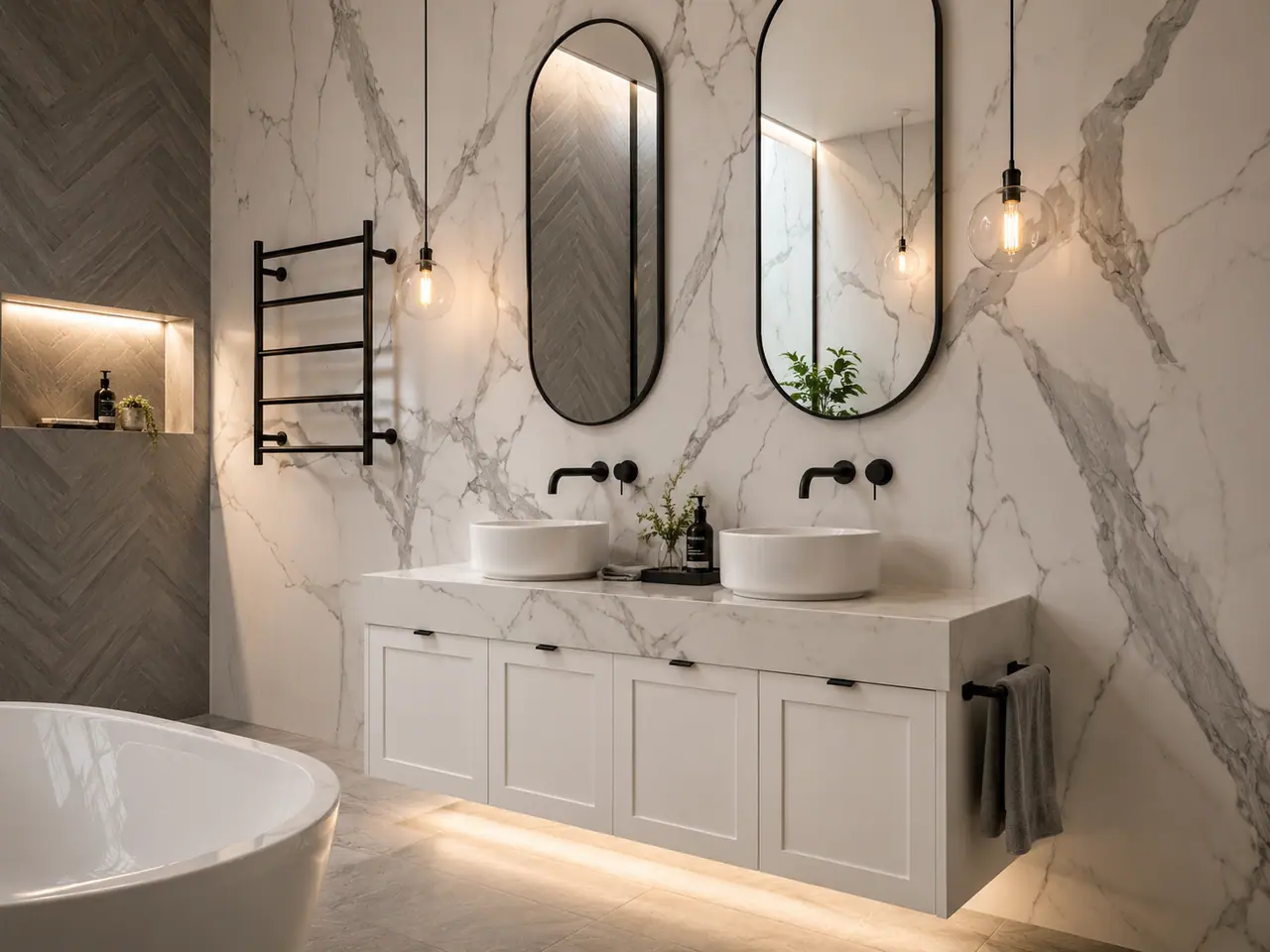
It's the first question almost everyone asks — and the honest answer is "it depends." A bathroom is one of the most complex rooms in a home: a small space packed with plumbing, waterproofing, tiling, electrical work and fine finishes, all of which have to be sequenced correctly. That complexity is exactly why two bathrooms of the same size can land at very different prices.
Below are the real 2026 numbers — typical Sydney bands and the line items behind them — followed by the factors that move your project up or down the range.
The short answer (Sydney, 2026)
A full bathroom renovation in Sydney typically costs $25,000–$35,000. Cosmetic makeovers run $10,000–$20,000, and premium or structural renovations run $35,000–$60,000+. Industry data puts the national average spend around $26,000 — Sydney sits above it. Those are honest numbers, not teaser rates. Here's where the money goes:
| Stage | Typical range |
|---|---|
| Strip-out and demolition | $1,000 – $3,000 |
| Waterproofing (AS 3740, certificate supplied) | $600 – $1,800 |
| Plumbing rough-in and fit-off | $4,500 – $8,000 |
| Electrical (lighting, exhaust, switches) | $800 – $2,000 |
| Tiling — supply and lay | $70 – $250 per m² |
| Fixtures (screen, toilet, vanity, tapware) | $1,200 – $6,000+ |
| Painting | $250 – $1,000 |
Three things push a bathroom from $25k toward $50k+: moving plumbing (relocating a toilet or shower is the single biggest jump), tiling to the ceiling instead of 1.8 m, and fixture choices — a frameless screen alone is $1,000+ versus around $450 framed.
What actually drives the cost
1. Size and layout
Bigger rooms use more materials and labour, but layout changes often cost more than size alone. Keeping plumbing fixtures roughly where they are is far cheaper than moving the toilet, shower or vanity to a new wall, which means relocating pipes and drainage.
2. Finishes and fixtures
This is the biggest lever you control. Tiles, tapware, the vanity, the shower screen and the toilet can range from budget to premium, and the difference adds up across the room. Imported stone, large-format tiles and designer brassware look stunning but cost more to buy and to install.
3. Waterproofing and tiling
Waterproofing is non-negotiable and code-regulated — it's what protects your home from hidden water damage for years to come. Tiling is labour-intensive, and intricate patterns, niches and large-format tiles all add time. This is skilled work where cutting corners is a false economy.
A bathroom is one of the few rooms where what you can't see — waterproofing, fall to the drain, substrate prep — matters as much as what you can.
4. Hidden conditions
Once the old bathroom comes out, things can surface: rotted timber, old or non-compliant plumbing, or previous waterproofing failures. A good builder allows for the likely and flags the possible, but some conditions are genuinely impossible to see until demolition.
5. Trades and coordination
A bathroom needs licensed plumbers and electricians, a waterproofer, a tiler and a builder to coordinate them in the right order. Smooth coordination keeps the job moving and the cost controlled; poor coordination causes delays that cost money.
Where the money goes
In most bathroom renovations, the cost splits roughly across demolition and prep, plumbing and electrical, waterproofing and tiling, fixtures and fittings, and the builder's coordination and finishing. Labour is typically the largest share — you're paying for skilled trades and careful sequencing, not just materials.
How to get an accurate figure
- Decide your priorities — what matters most: layout, finishes, or budget.
- Gather inspiration photos so the look is clear.
- Be realistic about selections before quoting — changing them later changes the price.
- Request a quote and, where helpful, a site visit so the scope is properly understood.
The most reliable way to know what your bathroom will cost is a proper quote based on your space and your selections — not a number from the internet.
Why renovations blow out — and how allowances prevent it
Around 75% of Australian renovators report unexpected costs. The usual cause isn't bad luck; it's quotes that never said what was included. That's why every Aurum Built package publishes a dollar allowance for every fixture — the vanity, the tiles, the tapware, the screen — before you sign. If you upgrade a fixture, you pay the difference and nothing else. Compare that line-for-line with any other quote you receive. Standard bathrooms are completed in 2–4 weeks, and all work carries our 6-year workmanship warranty and 10-year waterproofing warranty.
Your legal protections on a $20k+ job in NSW
Any residential job over $20,000 in NSW legally requires:
- a licensed contractor — verify our licence 481876C on the NSW Fair Trading public register;
- Home Building Compensation (HBCF) cover taken out before any money changes hands;
- a written, Fair-Trading-compliant contract;
- a deposit capped at 10%.
If a builder can't show you all four, that's your answer. We put them in every contract as a matter of course.
Frequently asked questions
Can I renovate a Sydney bathroom for under $20,000?
A full strip-and-rebuild under $20k is only realistic for standard-size bathrooms with no plumbing relocation and defined fixture allowances — that's exactly how our Bronze package is structured. Anything larger or relocated belongs in the $25k–$35k band.
What part should I never cut costs on?
Waterproofing. It's $600–$1,800 done properly to AS 3740 with a compliance certificate — and tens of thousands if it fails behind finished tiles. It's also where cheap quotes quietly save money.
Do I need council approval?
Most like-for-like bathroom renovations don't. Moving walls, plumbing to new locations, or strata buildings can trigger approvals — we flag it at the site visit.
Is the quote fixed?
Your contract lists the price and the allowance for every fixture. The only variations are ones you choose (upgrades) or genuine unforeseeables we document with photos before touching them.
Ready to start? Aurum Built handles bathroom & kitchen renovations across Sydney. You might also like our kitchen renovation cost guide and kitchen renovation checklist — or see how these numbers compare with what homeowners share on Reddit in our lessons-from-Reddit roundup.
Renovations Bathrooms Budgeting
Planning a bathroom renovation?
Tell us about your space and selections and we'll give you a clear, accurate quote.